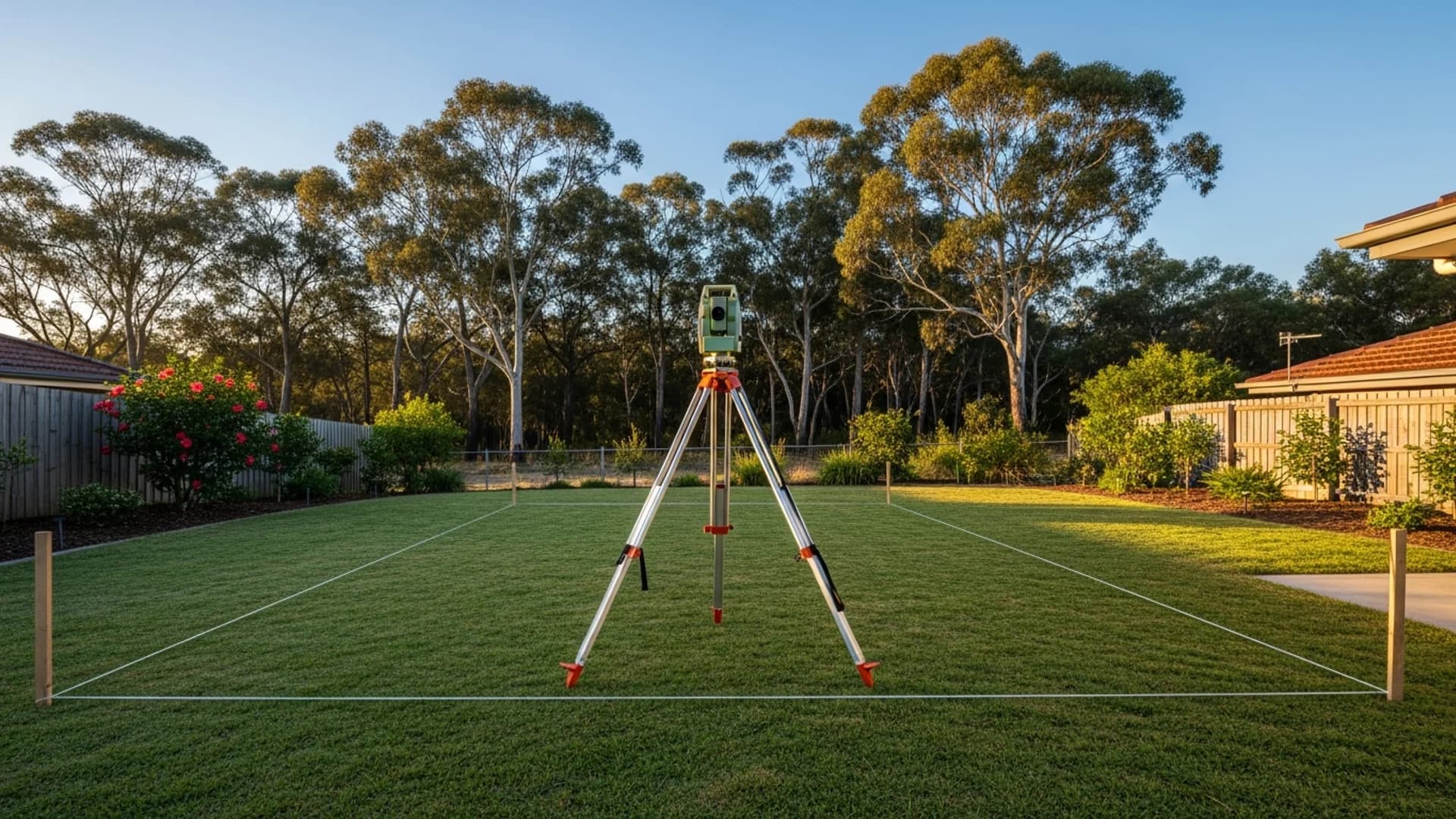
Granny Flat Rules in Australia: Regulations, Approvals and What You Need to Know
Every state has different granny flat rules — from size limits and setbacks to approval pathways and rental restrictions. Here's what actually applies to your project.
Building a granny flat in Australia is not as simple as choosing a design and calling a builder. Before construction can begin, you need to navigate a layered system of planning rules, building standards and — in some states — tenancy restrictions that determine what you can build, where you can build it and who can live in it.
The challenge is that granny flat rules differ significantly between states and territories. NSW has a well-established framework under the Housing SEPP with a fast-track CDC pathway. Victoria reformed its rules in late 2023 to remove planning permits for most builds. Queensland leaves most decisions to individual councils. Western Australia, South Australia, Tasmania, the ACT and the Northern Territory each have their own frameworks with different terminology, size limits and approval processes.
This guide provides a national overview of granny flat regulations across Australia. It covers the three layers of regulation that apply to every project, summarises the key rules in each state, and explains the approval pathways that determine how long your project will take to get off the ground. If you are planning a granny flat build, understanding these rules early will save you time, money and frustration.
Understanding Granny Flat Rules Across Australia
The Three Layers of Granny Flat Regulation
Every granny flat project in Australia must satisfy three distinct layers of regulation. Confusion between these layers is the most common mistake homeowners make — and it often leads to wasted time, incorrect applications and unexpected costs.
Layer 1 — Planning approval
Planning approval determines whether you are allowed to build a granny flat on your specific property. This is governed by state planning instruments and, in Queensland, by individual council planning schemes.
The key questions at this layer are: Is your lot zoned correctly? Does it meet the minimum size requirements? Can the granny flat meet setback distances from boundaries? Are there any overlays (heritage, bushfire, flooding) that restrict development?
If your property and proposed design meet all the criteria for your state's fast-track pathway, you can avoid the full council assessment process entirely. If not, you will need to lodge a standard application — which takes longer and involves more uncertainty.
Layer 2 — Building standards
Building standards govern how the granny flat must be constructed. The National Construction Code (NCC) is the primary framework, and it applies nationally. Every granny flat is classified as a Class 1a dwelling — the same classification as a standalone house — and must meet requirements for structural integrity, fire safety, energy performance, weatherproofing, accessibility and amenity.
State-specific additions include BASIX in NSW (an energy and water efficiency certificate required before approval), 7-star NatHERS ratings in Victoria, and the Livable Housing Design Standard (Silver Level) in Victoria for all new Class 1a dwellings including small second homes.
Layer 3 — Tenancy and use
Tenancy rules determine who can live in the granny flat and under what conditions. The good news is that most states have now removed occupancy restrictions. In NSW, anyone can live in or rent a secondary dwelling. Victoria, Queensland and South Australia have all followed suit. This means you can rent your granny flat to anyone — family or not — under standard residential tenancy laws.
Short-term rental accommodation (STRA) is a separate regulatory area. NSW caps STRA at 180 days per year in Greater Sydney (365 days elsewhere unless the council has opted for a lower cap). Victoria introduced a short-stay levy from 1 January 2025 for stays under 28 consecutive days.
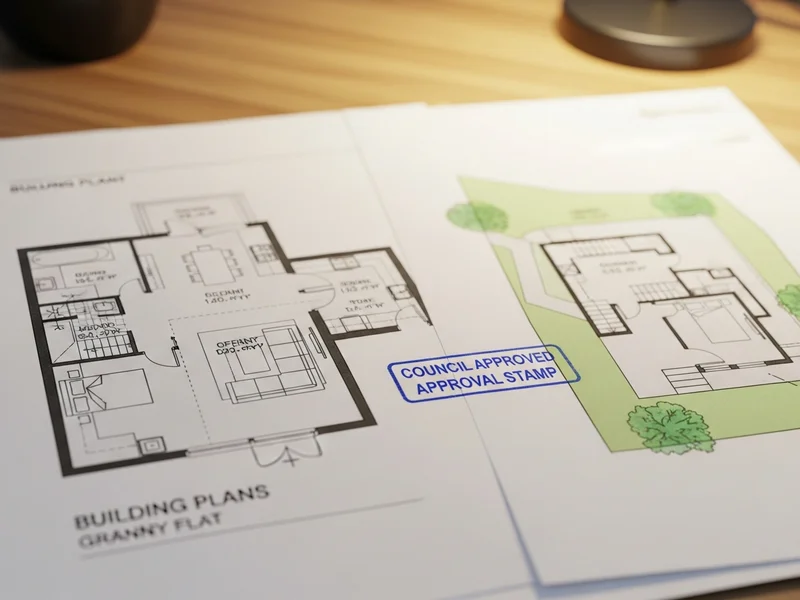
State-by-State Granny Flat Rules
NSW — The Most Established Framework
NSW has the most developed granny flat regulatory framework in Australia. The Housing SEPP sets out clear rules for secondary dwellings, including a fast-track CDC pathway that can deliver approval in as little as 10–20 business days.
Key NSW rules:
- Maximum floor area: 60sqm internal
- Minimum lot size for CDC: 450sqm with 12m frontage at the building line
- Zones: R1, R2, R3, R4 and R5 residential zones
- No additional parking required under CDC
- One secondary dwelling per lot — cannot be subdivided
- BASIX certificate required before CDC or DA can be issued (certificate fee: $50, 2025/26 FY)
- Occupation certificate (OC) required before anyone moves in
Setbacks for detached granny flats under CDC:
- Rear boundary: 3m (lots under 900sqm) or 5m (lots 900sqm+)
- Side boundary: 0.9m (lots under 900sqm) or 1.5m (lots 900sqm+)
- From principal dwelling: 1.8m minimum, or a fire-rated wall is required
Several conditions block the CDC pathway entirely, including heritage conservation areas, flood planning areas, bushfire-prone land (BAL-40 or Flame Zone), and certain acid sulfate soil classifications. If any of these apply to your property, you will need to lodge a DA instead.
For a detailed breakdown, see our granny flat guide which covers the full approval process.
Victoria — Recently Reformed
Victoria overhauled its granny flat framework in December 2023. The key change: a planning permit is no longer required for most small second dwellings on lots over 300sqm in residential zones.
Key Victorian rules:
- Maximum floor area: 60sqm
- No minimum lot size in planning law (main constraints are zoning and overlays)
- Planning permit not required in most cases since VC253 (December 2023)
- Building permit always required
- Official term: "small second dwelling" (the old "dependent person's unit" provisions expired in March 2026)
- No gas connection permitted (Victoria's Gas Substitution Roadmap)
- 7-star Whole of Home NatHERS rating required
- Livable Housing Design Standard (Silver Level) required — affecting door widths, step-free entry, bathroom clearances and reinforced walls for future grabrails
- No occupancy restrictions — anyone can rent a small second dwelling
Planning permits may still be required where bushfire, flooding, heritage or significant landscape overlays apply.
Queensland — Council-Driven Framework
Queensland does not have a state-level SEPP equivalent. A proposed state code sets GFA bands (80sqm on lots under 1,000sqm; 100sqm on lots at or over 1,000sqm), but individual council planning schemes currently prevail. This means the rules can differ significantly from one council area to the next.
Council-specific examples:
- Brisbane City Council: 80sqm under accepted development, must be within 20m of principal dwelling
- Gold Coast City Council: 80sqm standard, up to 120sqm with DA (exceeding 80sqm triggers infrastructure charges of approximately $24,000 in sewered areas)
- Sunshine Coast: 60sqm (90sqm in rural areas), shared services and additional parking required
- Moreton Bay: 45sqm or 55sqm depending on lot size
Queensland removed occupancy restrictions statewide in September 2022. Any homeowner can now rent their secondary dwelling to anyone.
Western Australia
WA uses the Residential Design Codes (R-Codes) to regulate what it calls "ancillary dwellings." The framework is relatively straightforward: if your design meets the R-Codes deemed-to-comply requirements, no planning approval is required — only a building permit.
Key WA rules:
- Maximum floor area: 70sqm
- No minimum lot size (removed by R-Codes reforms)
- Exempt from planning approval if deemed-to-comply requirements are met
- Building permit required
- Cannot be subdivided
South Australia, Tasmania, ACT and Northern Territory
South Australia uses the term "ancillary accommodation" and allows up to 70sqm (increased from 60sqm). Self-contained dwellings with kitchens, bathrooms and laundries are now permitted, and you can rent to non-family members.
Tasmania permits "secondary residences" up to 60sqm, though the government has announced an increase to 90sqm (reform in progress). Building and plumbing approvals are always required, and separate service connections are not permitted.
The ACT allows "secondary residences" up to 90sqm on lots of 500sqm or more. A Development Application through the ACT Planning Authority is generally required.
The Northern Territory calls them "independent units" and in most cases does not require planning approval if the NT Planning Scheme requirements are met. A building permit is required.
Comparing Granny Flat Rules Across States
| State | Term Used | Max Size | Min Lot Size | Fast-Track Pathway | Can Rent? | |---|---|---|---|---|---| | NSW | Secondary dwelling | 60sqm | 450sqm (CDC) | CDC | Yes | | VIC | Small second dwelling | 60sqm | No minimum | No planning permit needed | Yes | | QLD | Secondary dwelling | Varies by council | Varies by council | Accepted development | Yes | | WA | Ancillary dwelling | 70sqm | No minimum | Exempt if deemed to comply | Check locally | | SA | Ancillary accommodation | 70sqm | Varies | Varies | Yes | | TAS | Secondary residence | 60sqm (90sqm proposed) | Varies | Varies | Check locally | | ACT | Secondary residence | 90sqm | 500sqm | Generally requires DA | Check locally | | NT | Independent unit | Varies | Varies | Generally no planning approval | Check locally |
CDC vs DA — Understanding the Two Main Approval Pathways
The approval pathway you qualify for has a major impact on your project timeline and budget. In NSW, the difference between a CDC and a DA can mean weeks versus months of waiting — and the difference between a predictable outcome and an uncertain one.
A Complying Development Certificate (CDC) is a fast-track approval issued by a private certifier (not council). If your property and design meet all the criteria in the Housing SEPP, a CDC can typically be approved in 10–20 business days. The certifier checks your plans against a prescribed list of standards — there is no subjective assessment or neighbour notification.
A Development Application (DA) is lodged with your local council. It involves a merit-based assessment, which means the council considers the broader impact of your proposal — including neighbour amenity, streetscape, traffic and environmental factors. DAs typically take 6–12 weeks but can extend to 6 months or longer if complications arise.
If you are comparing these two pathways in detail, our upcoming CDC vs DA granny flat guide will cover the full decision framework.
For an overview of what granny flat building costs look like — including approval fees — see our dedicated cost guide.
Common Questions About Granny Flat Rules
Do I need council approval for a granny flat?
It depends on your state and your property. In NSW, you may not need council approval if you qualify for a CDC — your application goes to a private certifier instead. In Victoria, most builds on lots over 300sqm in residential zones no longer need a planning permit. In Queensland, builds that meet the accepted development criteria in your council's planning scheme do not require a DA. However, a building permit or equivalent is required in every state without exception.
Can I build a granny flat on any property?
No. Your property must meet minimum requirements for lot size, frontage, zoning and setbacks. Overlays such as heritage, bushfire, flooding and environmental sensitivity can further restrict or prevent granny flat development. The fastest way to check is to look up your property on your state's planning portal or contact your local council.
How long does granny flat approval take?
Fast-track pathways (CDC in NSW, accepted development in QLD, exempt in WA) can deliver approval in 10–20 business days. Standard council applications (DA) typically take 6–12 weeks but can extend significantly. Factor in 2–4 weeks for pre-approval steps like surveys, soil tests and BASIX certificates (NSW).
If you are ready to start planning your build, comparing quotes from experienced granny flat builders is a practical next step.
Granny flat builders in Australia
Browse profiles, compare service areas, and check reviews.

Garden Studios
★ 5.0 (63 reviews)
View profile →

Perway Ecopods
★ 5.0 (43 reviews)
Perth-based home renovation and construction company offering custom builds with transparent service.
View profile →

Out-Back Portable Buildings
★ 5.0 (25 reviews)
Custom-made, pre-fabricated transportable homes including granny flats, offices, and portable buildings.
View profile →

Adams Cabins
★ 5.0 (20 reviews)
Family-owned cabin builders specializing in log cabins, granny flats, and tiny homes in SE Queensland.
View profile →
ATN Constructions
★ 5.0 (18 reviews)
View profile →

Dare Constructions
★ 5.0 (16 reviews)
Steel frame construction specialist including granny flats, carports, sheds across Newcastle, Hunter Valley, and Sydney.
View profile →
GrannyFlatGuide is a comparison platform. Companies shown are filtered by relevance to this page. Listing does not imply endorsement. GrannyFlatGuide may receive a referral fee when you request quotes.
Put this into action
Check your property’s zoning and approval pathway, then connect with verified builders when you’re ready.
What can you build on your property?
Enter your address and we'll check your zoning, overlays, and what's possible on your block.
We use your address to check council zoning and planning rules — not stored until you choose to continue.
Understanding Granny Flat Rules Across Australia
The Three Layers of Granny Flat Regulation
Every granny flat project in Australia must satisfy three distinct layers of regulation. Confusion between these layers is the most common mistake homeowners make — and it often leads to wasted time, incorrect applications and unexpected costs.
Layer 1 — Planning approval
Planning approval determines whether you are allowed to build a granny flat on your specific property. This is governed by state planning instruments and, in Queensland, by individual council planning schemes.
The key questions at this layer are: Is your lot zoned correctly? Does it meet the minimum size requirements? Can the granny flat meet setback distances from boundaries? Are there any overlays (heritage, bushfire, flooding) that restrict development?
If your property and proposed design meet all the criteria for your state's fast-track pathway, you can avoid the full council assessment process entirely. If not, you will need to lodge a standard application — which takes longer and involves more uncertainty.
Layer 2 — Building standards
Building standards govern how the granny flat must be constructed. The National Construction Code (NCC) is the primary framework, and it applies nationally. Every granny flat is classified as a Class 1a dwelling — the same classification as a standalone house — and must meet requirements for structural integrity, fire safety, energy performance, weatherproofing, accessibility and amenity.
State-specific additions include BASIX in NSW (an energy and water efficiency certificate required before approval), 7-star NatHERS ratings in Victoria, and the Livable Housing Design Standard (Silver Level) in Victoria for all new Class 1a dwellings including small second homes.
Layer 3 — Tenancy and use
Tenancy rules determine who can live in the granny flat and under what conditions. The good news is that most states have now removed occupancy restrictions. In NSW, anyone can live in or rent a secondary dwelling. Victoria, Queensland and South Australia have all followed suit. This means you can rent your granny flat to anyone — family or not — under standard residential tenancy laws.
Short-term rental accommodation (STRA) is a separate regulatory area. NSW caps STRA at 180 days per year in Greater Sydney (365 days elsewhere unless the council has opted for a lower cap). Victoria introduced a short-stay levy from 1 January 2025 for stays under 28 consecutive days.
State-by-State Granny Flat Rules
NSW — The Most Established Framework
NSW has the most developed granny flat regulatory framework in Australia. The Housing SEPP sets out clear rules for secondary dwellings, including a fast-track CDC pathway that can deliver approval in as little as 10–20 business days.
Key NSW rules:
- Maximum floor area: 60sqm internal
- Minimum lot size for CDC: 450sqm with 12m frontage at the building line
- Zones: R1, R2, R3, R4 and R5 residential zones
- No additional parking required under CDC
- One secondary dwelling per lot — cannot be subdivided
- BASIX certificate required before CDC or DA can be issued (certificate fee: $50, 2025/26 FY)
- Occupation certificate (OC) required before anyone moves in
Setbacks for detached granny flats under CDC:
- Rear boundary: 3m (lots under 900sqm) or 5m (lots 900sqm+)
- Side boundary: 0.9m (lots under 900sqm) or 1.5m (lots 900sqm+)
- From principal dwelling: 1.8m minimum, or a fire-rated wall is required
Several conditions block the CDC pathway entirely, including heritage conservation areas, flood planning areas, bushfire-prone land (BAL-40 or Flame Zone), and certain acid sulfate soil classifications. If any of these apply to your property, you will need to lodge a DA instead.
For a detailed breakdown, see our granny flat guide which covers the full approval process.
Victoria — Recently Reformed
Victoria overhauled its granny flat framework in December 2023. The key change: a planning permit is no longer required for most small second dwellings on lots over 300sqm in residential zones.
Key Victorian rules:
- Maximum floor area: 60sqm
- No minimum lot size in planning law (main constraints are zoning and overlays)
- Planning permit not required in most cases since VC253 (December 2023)
- Building permit always required
- Official term: "small second dwelling" (the old "dependent person's unit" provisions expired in March 2026)
- No gas connection permitted (Victoria's Gas Substitution Roadmap)
- 7-star Whole of Home NatHERS rating required
- Livable Housing Design Standard (Silver Level) required — affecting door widths, step-free entry, bathroom clearances and reinforced walls for future grabrails
- No occupancy restrictions — anyone can rent a small second dwelling
Planning permits may still be required where bushfire, flooding, heritage or significant landscape overlays apply.
Queensland — Council-Driven Framework
Queensland does not have a state-level SEPP equivalent. A proposed state code sets GFA bands (80sqm on lots under 1,000sqm; 100sqm on lots at or over 1,000sqm), but individual council planning schemes currently prevail. This means the rules can differ significantly from one council area to the next.
Council-specific examples:
- Brisbane City Council: 80sqm under accepted development, must be within 20m of principal dwelling
- Gold Coast City Council: 80sqm standard, up to 120sqm with DA (exceeding 80sqm triggers infrastructure charges of approximately $24,000 in sewered areas)
- Sunshine Coast: 60sqm (90sqm in rural areas), shared services and additional parking required
- Moreton Bay: 45sqm or 55sqm depending on lot size
Queensland removed occupancy restrictions statewide in September 2022. Any homeowner can now rent their secondary dwelling to anyone.
Western Australia
WA uses the Residential Design Codes (R-Codes) to regulate what it calls "ancillary dwellings." The framework is relatively straightforward: if your design meets the R-Codes deemed-to-comply requirements, no planning approval is required — only a building permit.
Key WA rules:
- Maximum floor area: 70sqm
- No minimum lot size (removed by R-Codes reforms)
- Exempt from planning approval if deemed-to-comply requirements are met
- Building permit required
- Cannot be subdivided
South Australia, Tasmania, ACT and Northern Territory
South Australia uses the term "ancillary accommodation" and allows up to 70sqm (increased from 60sqm). Self-contained dwellings with kitchens, bathrooms and laundries are now permitted, and you can rent to non-family members.
Tasmania permits "secondary residences" up to 60sqm, though the government has announced an increase to 90sqm (reform in progress). Building and plumbing approvals are always required, and separate service connections are not permitted.
The ACT allows "secondary residences" up to 90sqm on lots of 500sqm or more. A Development Application through the ACT Planning Authority is generally required.
The Northern Territory calls them "independent units" and in most cases does not require planning approval if the NT Planning Scheme requirements are met. A building permit is required.
Comparing Granny Flat Rules Across States
| State | Term Used | Max Size | Min Lot Size | Fast-Track Pathway | Can Rent? | |---|---|---|---|---|---| | NSW | Secondary dwelling | 60sqm | 450sqm (CDC) | CDC | Yes | | VIC | Small second dwelling | 60sqm | No minimum | No planning permit needed | Yes | | QLD | Secondary dwelling | Varies by council | Varies by council | Accepted development | Yes | | WA | Ancillary dwelling | 70sqm | No minimum | Exempt if deemed to comply | Check locally | | SA | Ancillary accommodation | 70sqm | Varies | Varies | Yes | | TAS | Secondary residence | 60sqm (90sqm proposed) | Varies | Varies | Check locally | | ACT | Secondary residence | 90sqm | 500sqm | Generally requires DA | Check locally | | NT | Independent unit | Varies | Varies | Generally no planning approval | Check locally |
CDC vs DA — Understanding the Two Main Approval Pathways
The approval pathway you qualify for has a major impact on your project timeline and budget. In NSW, the difference between a CDC and a DA can mean weeks versus months of waiting — and the difference between a predictable outcome and an uncertain one.
A Complying Development Certificate (CDC) is a fast-track approval issued by a private certifier (not council). If your property and design meet all the criteria in the Housing SEPP, a CDC can typically be approved in 10–20 business days. The certifier checks your plans against a prescribed list of standards — there is no subjective assessment or neighbour notification.
A Development Application (DA) is lodged with your local council. It involves a merit-based assessment, which means the council considers the broader impact of your proposal — including neighbour amenity, streetscape, traffic and environmental factors. DAs typically take 6–12 weeks but can extend to 6 months or longer if complications arise.
If you are comparing these two pathways in detail, our upcoming CDC vs DA granny flat guide will cover the full decision framework.
For an overview of what granny flat building costs look like — including approval fees — see our dedicated cost guide.
Common Questions About Granny Flat Rules
Do I need council approval for a granny flat?
It depends on your state and your property. In NSW, you may not need council approval if you qualify for a CDC — your application goes to a private certifier instead. In Victoria, most builds on lots over 300sqm in residential zones no longer need a planning permit. In Queensland, builds that meet the accepted development criteria in your council's planning scheme do not require a DA. However, a building permit or equivalent is required in every state without exception.
Can I build a granny flat on any property?
No. Your property must meet minimum requirements for lot size, frontage, zoning and setbacks. Overlays such as heritage, bushfire, flooding and environmental sensitivity can further restrict or prevent granny flat development. The fastest way to check is to look up your property on your state's planning portal or contact your local council.
How long does granny flat approval take?
Fast-track pathways (CDC in NSW, accepted development in QLD, exempt in WA) can deliver approval in 10–20 business days. Standard council applications (DA) typically take 6–12 weeks but can extend significantly. Factor in 2–4 weeks for pre-approval steps like surveys, soil tests and BASIX certificates (NSW).
If you are ready to start planning your build, comparing quotes from experienced granny flat builders is a practical next step.
Granny flat builders in Australia
Browse profiles, compare service areas, and check reviews.
Garden Studios
★ 5.0 (63 reviews)
View profile →
Perway Ecopods
★ 5.0 (43 reviews)
Perth-based home renovation and construction company offering custom builds with transparent service.
View profile →
Out-Back Portable Buildings
★ 5.0 (25 reviews)
Custom-made, pre-fabricated transportable homes including granny flats, offices, and portable buildings.
View profile →
Adams Cabins
★ 5.0 (20 reviews)
Family-owned cabin builders specializing in log cabins, granny flats, and tiny homes in SE Queensland.
View profile →
ATN Constructions
★ 5.0 (18 reviews)
View profile →
Dare Constructions
★ 5.0 (16 reviews)
Steel frame construction specialist including granny flats, carports, sheds across Newcastle, Hunter Valley, and Sydney.
View profile →
GrannyFlatGuide is a comparison platform. Companies shown are filtered by relevance to this page. Listing does not imply endorsement. GrannyFlatGuide may receive a referral fee when you request quotes.
Put this into action
Check your property’s zoning and approval pathway, then connect with verified builders when you’re ready.
What can you build on your property?
Enter your address and we'll check your zoning, overlays, and what's possible on your block.
We use your address to check council zoning and planning rules — not stored until you choose to continue.
Key Granny Flat Regulations at a Glance
Three layers of regulation
Every granny flat project must satisfy planning approval (can you build?), building standards (how must it be built?) and tenancy rules (who can live in it?). Understanding which layer applies to your question is the first step to getting the right answer.
Size limits vary by state
NSW and Victoria cap granny flats at 60sqm. Western Australia and South Australia allow up to 70sqm. The ACT permits 90sqm. Queensland varies by council — from 45sqm in Moreton Bay to 120sqm on the Gold Coast with a DA.
Two main approval pathways
Most states offer a fast-track pathway (CDC in NSW, accepted development in QLD, exempt in WA) and a standard council application (DA). The fast-track route can cut approval time from months to weeks — but your property and design must meet specific criteria.
Rental restrictions have been removed in most states
NSW has no occupancy restrictions. Victoria removed restrictions in 2023. Queensland removed them statewide in September 2022. South Australia now permits self-contained dwellings with full kitchens and bathrooms that can be rented to non-family members.
Building standards are national
The National Construction Code (NCC) applies in every state. All granny flats are classified as Class 1a dwellings and must meet the same structural, fire safety, energy and amenity standards as a full-sized house.
CDC vs DA makes a real difference
In NSW, a Complying Development Certificate (CDC) can be approved in 10–20 business days through a private certifier. A Development Application (DA) goes to council and can take 6–12+ weeks. The pathway you qualify for depends on your property, zone and any overlays.
Frequently asked questions
It depends on your state and property. In NSW, you may qualify for a Complying Development Certificate (CDC) through a private certifier — bypassing council entirely. In Victoria, most builds on lots over 300sqm no longer need a planning permit. In Queensland, builds meeting accepted development criteria skip council assessment. However, every state requires a building permit or equivalent before construction can begin.
Size limits vary by state: NSW and Victoria cap granny flats at 60sqm internal floor area. Western Australia and South Australia allow up to 70sqm. The ACT permits 90sqm. Queensland varies by council — Brisbane allows 80sqm under accepted development, while the Gold Coast allows up to 120sqm with a DA. Tasmania currently permits 60sqm but has announced reforms to increase this to 90sqm.
A CDC (Complying Development Certificate) is a fast-track approval in NSW issued by a private certifier — typically taking 10–20 business days. A DA (Development Application) is lodged with your local council and involves a merit-based assessment that can take 6–12+ weeks. You qualify for a CDC if your property and design meet all criteria in the Housing SEPP. If not, a DA is required.
Yes, in most states. NSW has no occupancy restrictions — you can rent to anyone. Victoria removed restrictions in 2023. Queensland removed occupancy restrictions statewide in September 2022. South Australia now permits self-contained dwellings that can be rented to non-family members. In WA, TAS, ACT and NT, check your local rules as restrictions may still apply in some circumstances.
Minimum lot sizes vary significantly. In NSW, you need at least 450sqm with 12m frontage to qualify for a CDC. Victoria has no minimum lot size in planning law — the main constraints are zoning and overlays. WA also has no minimum lot size under the revised R-Codes. The ACT requires at least 500sqm. In Queensland, lot size requirements are set by individual councils.
Approval costs depend on the pathway. In NSW, a CDC typically costs $2,000–$5,000 through a private certifier, plus a $50 BASIX certificate fee. A DA involves council lodgement fees that vary by council area. You should also budget for pre-approval costs including a land survey ($800–$1,500), soil test ($500–$1,000) and engineering assessment. Total approval-related costs typically range from $5,000 to $25,000 depending on the complexity of your site.
Potentially, but it depends on the bushfire attack level (BAL) of your site. In NSW, properties rated BAL-40 or Flame Zone cannot use the fast-track CDC pathway — you must lodge a DA instead. In Victoria, a bushfire management overlay triggers the need for a planning permit. Granny flats in bushfire-prone areas must be constructed to AS 3959 (Construction of buildings in bushfire-prone areas), which increases building costs.
Setback requirements vary by state. In NSW under the CDC pathway, detached granny flats on lots under 900sqm require a 3m rear setback, 0.9m side setback and 1.8m separation from the principal dwelling. Lots over 900sqm require 5m rear and 1.5m side setbacks. Buildings over 3.8m in height trigger additional setback penalties. Other states have their own setback requirements — check your state's planning rules or talk to your local council.
Yes, but short-term rental accommodation (STRA) regulations apply. In NSW, STRA is capped at 180 days per year in Greater Sydney (365 days elsewhere, unless the council has opted for a lower cap). Victoria introduced a short-stay levy from 1 January 2025 for stays under 28 consecutive days. STRA registration may be required. Check your state and council regulations before listing.
Yes. Detached granny flats must meet setback distances from the principal dwelling (1.8m in NSW) or have a fire-rated wall. Attached granny flats share a wall with the main dwelling, which requires fire-rated construction at the shared boundary. Attached builds may qualify for CDC on lots where a detached build cannot meet setback requirements. However, detached builds generally offer better privacy and higher rental appeal.
Generally, no. In every state, a secondary dwelling (granny flat) cannot be subdivided from the principal dwelling — both must remain on a single title. If you want separate titles, you are looking at a dual occupancy development, which has different rules, longer approval timeframes and higher costs. Some Queensland councils treat secondary dwellings over a certain size as dual occupancy.
All granny flats in Australia must comply with the National Construction Code (NCC) as Class 1a dwellings — the same classification as a standalone house. This covers structural integrity, fire safety, energy performance, weatherproofing and amenity. Additional state requirements include BASIX in NSW (energy and water efficiency), 7-star NatHERS ratings in Victoria, and Victoria's Livable Housing Design Standard (Silver Level) requiring wider doorways, step-free entry and reinforced bathroom walls.
Related guides
Guide
Granny Flat Rules Victoria 2026 — Planning & Building Guide
Victoria's granny flat rules explained — planning permits, 60sqm cap, building requirements, DPU changes, and how the 2023-2026 reforms affect your build.
Guide
Granny Flat Rules NSW — CDC, Setbacks & Approvals (2026)
NSW granny flat rules explained — lot size minimums, CDC vs DA pathways, setback distances and BASIX requirements under SEPP (Housing) 2021.
Cost guide
2 Bedroom Granny Flat Cost — Pricing by Build Type (2026)
A 2-bedroom granny flat costs $114,000–$237,000 GST-inclusive in Australia. See pricing by build type (kit, prefab, custom), state, and finish level.
Cost guide
Granny Flat Prices in Australia — Real Builder Pricing Compared (2026)
Compare real granny flat prices across budget prefab, mid-range custom, and premium turnkey tiers. See what the 'from' price includes and what you'll actually pay in 2026.
Ready to compare granny flat quotes?
Get free, no-obligation quotes from vetted granny flat builders in your area. Compare prices, inclusions and timelines side by side.
Join 1,000+ Australians who've used GrannyFlatGuide to research their granny flat project
Get free quotes